PoE Protoype PCBs
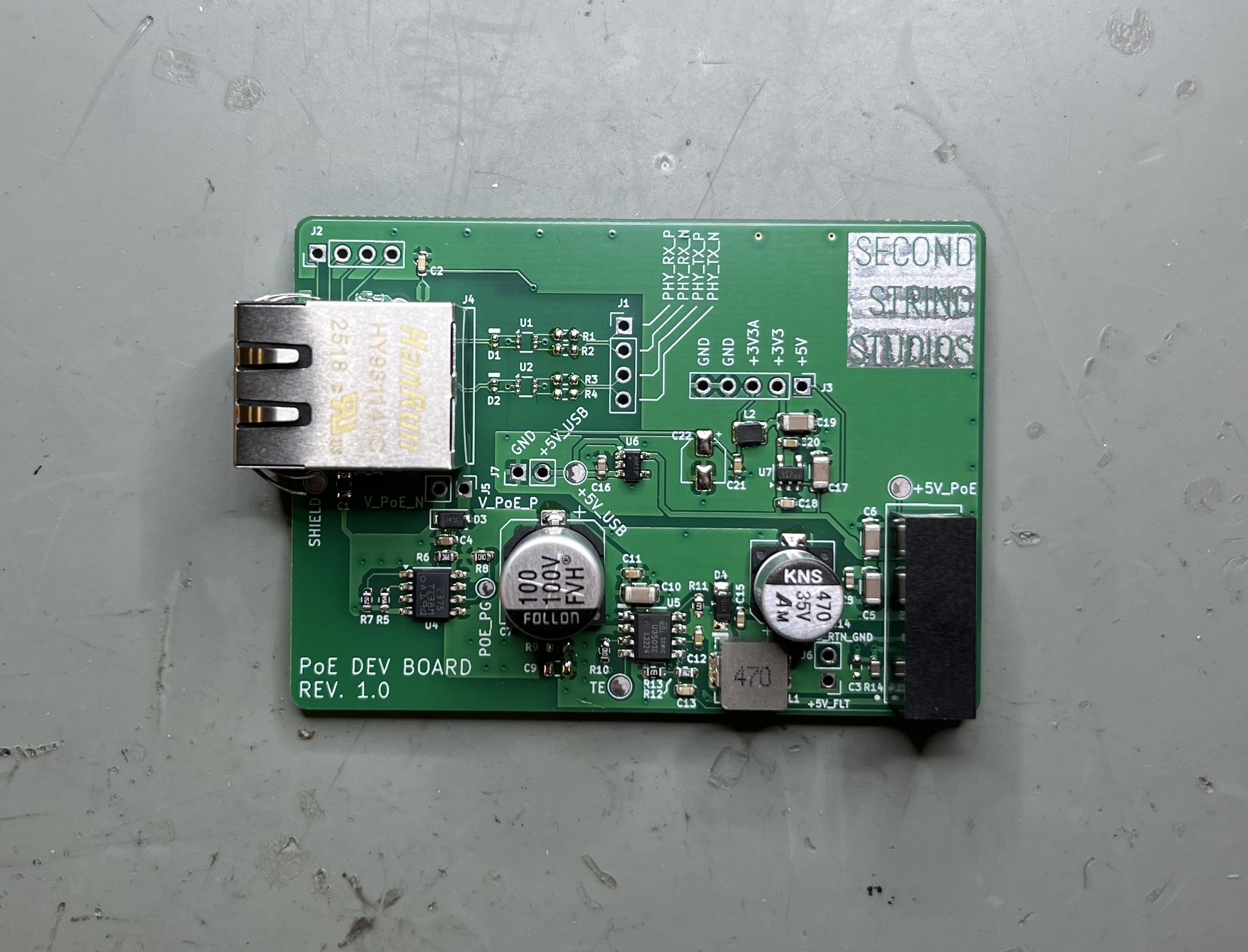
The original complete PoE test PCB
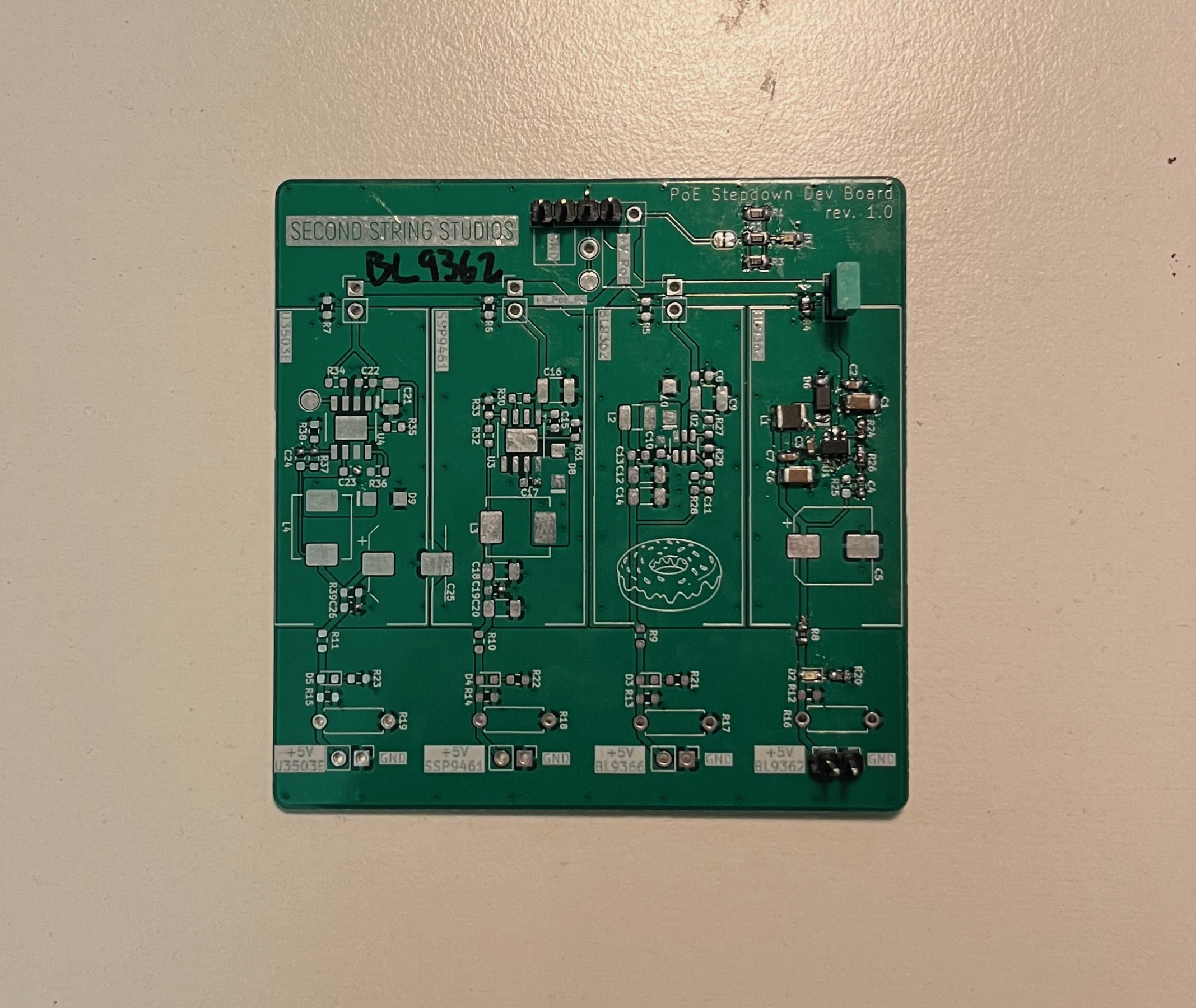
The stepdown dev board populated only for the BL9362
The goal of these PCBs was to test a basic PoE implementation for use in later, more complex designs. It was initially designed as a single PCB, but due to difficulties with the 48V stepdown section of the circuit, split into two implementations. Design files for both are available on request.
PoE PCB
This was originally built to verify the entire chain of PoE -> stepdown -> isolation, as well as safe ORing of power inputs between PoE and USB. Due to difficulties with one component, it ended up being a very basic board for just the PoE section and the final power ORing.
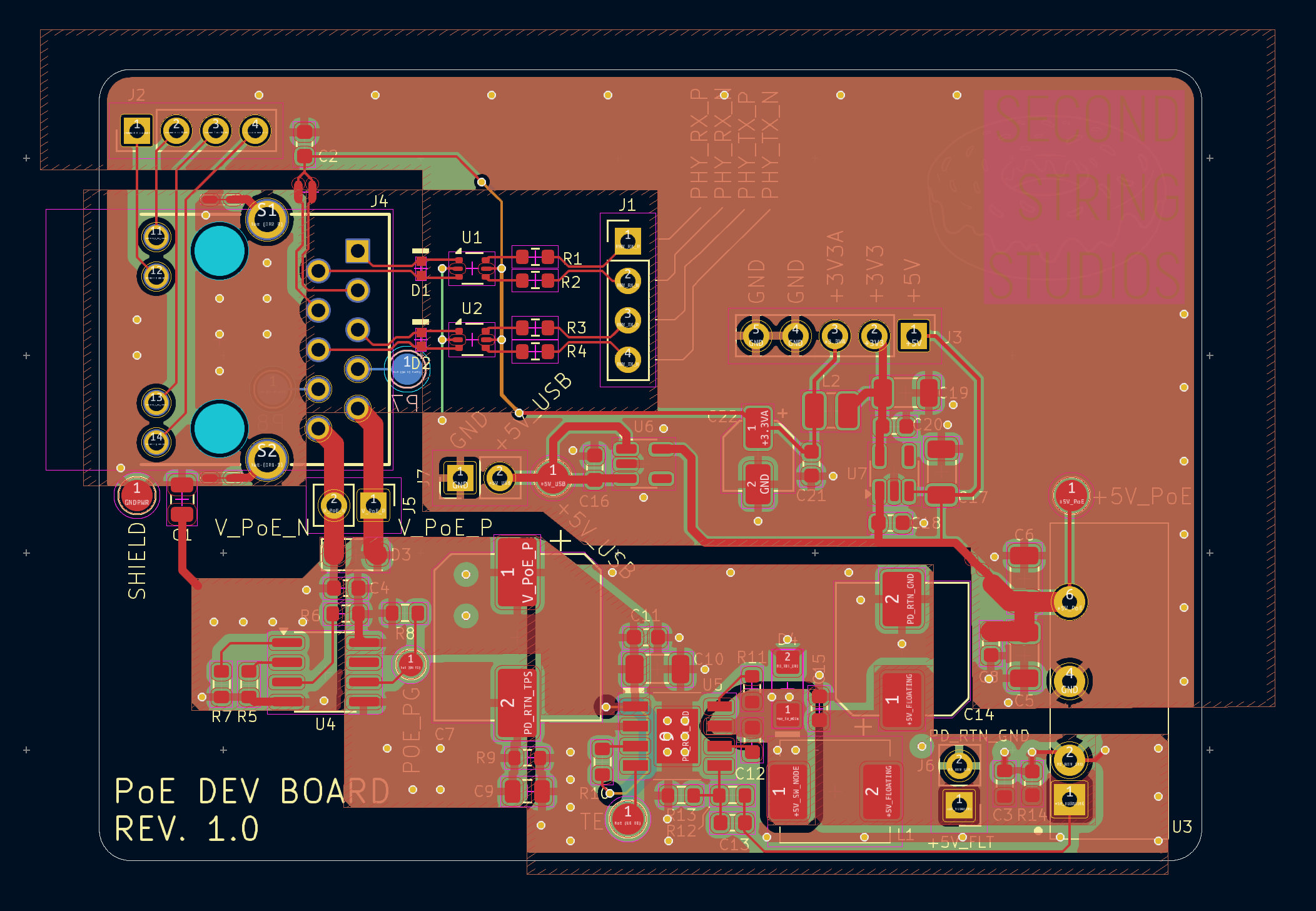
It was designed and built around the TPS2375 chip from TI, a fairly common choice for standard PoE device implementations. This subcircuit was designed quite close to the datasheet recommended circuit with only a couple small changes (like sizing the class resistor for a Class I low-power device).
The initial choice for the 48V -> 5V buck IC was the U3503E. This implementation wasn’t working as expected, which led to the development of the second dev board.
PoE Stepdown PCB
This was a created as a test board to compare four different low-cost buck switching regulators. One was the same IC used in the PoE PCB, to verify that nothing in that PCB design was causing the issues.
The four ICs chosen were:
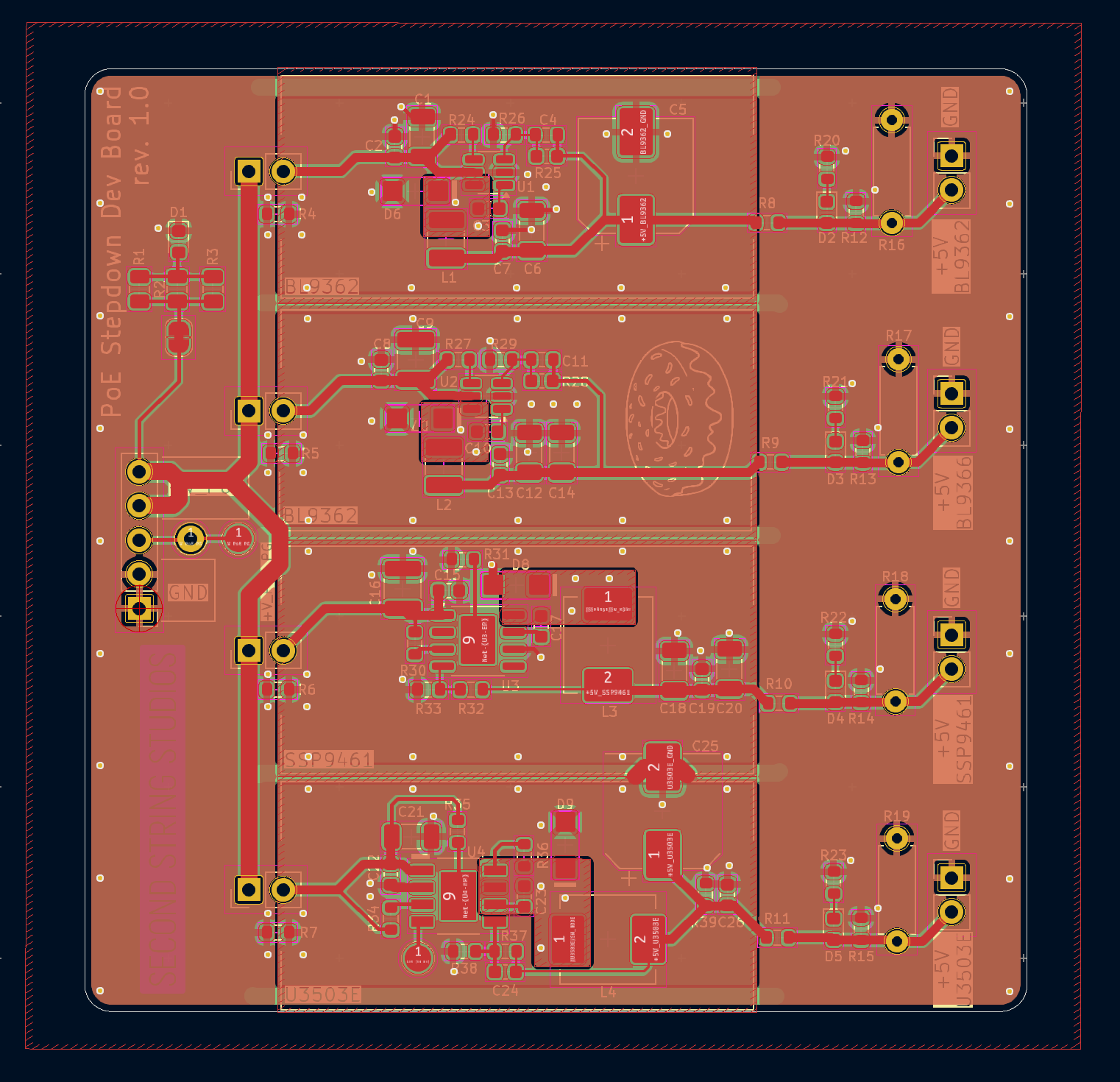
The PCB was designed to be used in conjunction with the PoE dev board, with one main 48V input and individual 5V outputs with their own load resistors and indication LEDs. Each subcircuit was laid out with its own ground pour, with solder jumpers connecting each ground pour to the main input ground. This was to make sure there was no influence of each subcircuit, especially input and load capacitance, on each other.
The end decision was the BL9362 as it was the simplest implementation with lower/cheapest part count. Deeper analysis such as ripple voltage or overall efficiency wasn’t necessary as this will be used in low-power devices with external non-battery power.